
Advertisements
I’ll never forget the month my husband and I overdrew our checking account three times in two weeks. Three times! The bank fees alone cost us $105, and honestly, that was money we could’ve used for groceries or, you know, literally anything else. That’s when my grandmother sat me down and told me about the envelope budgeting system she’d used for decades—and let me tell you, it completely changed how I think about money.
Here’s the thing about envelope budgeting: it’s ridiculously simple, which is probably why it works so dang well. The basic idea is that you divide your cash into different envelopes for different spending categories. When the envelope’s empty, you’re done spending in that category for the month. Period. End of story.
Why This Old-School Method Still Kicks Butt in 2026
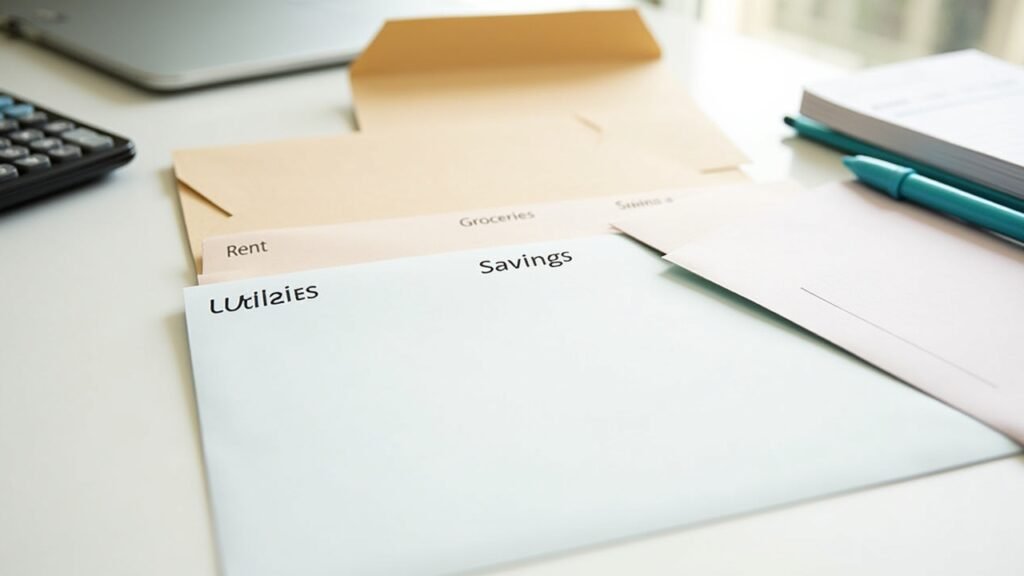
Look, I know what you’re thinking. Cash? Envelopes? Aren’t we supposed to be using some fancy app or cryptocurrency by now? But here’s what I learned the hard way—when you swipe a card, your brain doesn’t register that you’re spending real money the same way it does when you hand over actual bills.
There’s actual science behind this! Studies show that people spend up to 83% more when using credit cards compared to cash. That’s nuts, right? But it totally makes sense when you think about it.
I remember the first month I tried envelope budgeting. I had this moment at Target (because of course it was Target) where I reached for my “shopping” envelope and realized I only had $12 left. I literally put back a throw pillow I didn’t need. The old me would’ve just swiped my card without thinking twice.
Setting Up Your Envelope Budget System
Okay, so here’s how you actually do this thing. First, you gotta figure out your spending categories. I started with the basics: groceries, gas, eating out, entertainment, and personal spending money for both me and my husband.
Then comes the slightly annoying part—you need to track your spending for a month or two to see where your money’s actually going. I used a simple notebook because I’m old-fashioned like that, but you could totally use a budgeting worksheet or spreadsheet if that’s your jam.
Once you know your numbers, withdraw that amount in cash at the beginning of each month. I go to the bank on the first of every month now. It’s become this weird little ritual I actually look forward to.
The Envelope Categories That Work Best
- Groceries (this was always my biggest troublemaker)
- Gas and transportation
- Restaurants and takeout
- Entertainment and fun stuff
- Personal spending (like clothes, haircuts, whatever)
- Household items and random stuff from Target
Here’s a pro tip I wish someone had told me: start with fewer categories! I tried doing like 15 different envelopes at first and it was overwhelming as hell. You can always add more later once you get the hang of it.
When I Totally Screwed It Up (And What I Learned)
So month two of my envelope budgeting journey was a disaster. We had this unexpected car repair that cost $400, and I panicked and just… borrowed from other envelopes. By the end of the month, I had no idea what money was supposed to be for what, and the whole system fell apart.
That’s when I realized you need an emergency envelope too. Now I keep a separate stash that doesn’t get touched unless something genuinely unexpected happens. Not “unexpected” like a sale at my favorite store—actually unexpected, like the water heater dying or your kid needs emergency dental work.
Another mistake? Being too strict with myself at first. I gave myself $30 a month for eating out, which sounds reasonable until you remember that I’m a working parent who sometimes just cannot even with cooking dinner. Now I budget $80 for restaurants and guess what—I actually stick to it because it feels doable.
The Digital Twist (Because It’s Not 1950 Anymore)
Look, I still pay my rent and utilities online because come on, I’m not that old-school. The envelope system works best for variable expenses—the stuff where you might be tempted to overspend. Your mortgage or car payment? Those can stay automated.
Some people use apps like Goodbudget that mimic the envelope system digitally. I tried it briefly but found that for me personally, the physical cash made a bigger psychological impact. Your mileage may vary, though—do what actually works for your life.
Your Money, Your Envelopes, Your Rules
The beautiful thing about envelope budgeting is that it’s totally customizable. My sister uses it just for groceries and eating out because those are her problem areas. My coworker uses it for literally everything except bills. There’s no wrong way to do it as long as it helps you spend less than you earn.
After six months of using this system, my husband and I had saved an extra $800 without really feeling deprived. We used that money for a weekend trip, which felt amazing because it was guilt-free spending. We’d actually saved for it instead of just throwing it on a credit card and worrying about it later.
If you’re struggling with overspending or just feeling like your money disappears every month, give the envelope budgeting system a try. Start small, be patient with yourself, and adjust as you go. And hey, if you mess up one month like I did, just start fresh the next month. That’s the beauty of it—there’s always another chance to get it right.
Want more practical money tips that actually work in real life? Head over to Money Mythos where we’re all about making personal finance less scary and more doable. Trust me, if I can figure this stuff out, anyone can!